Skip to content

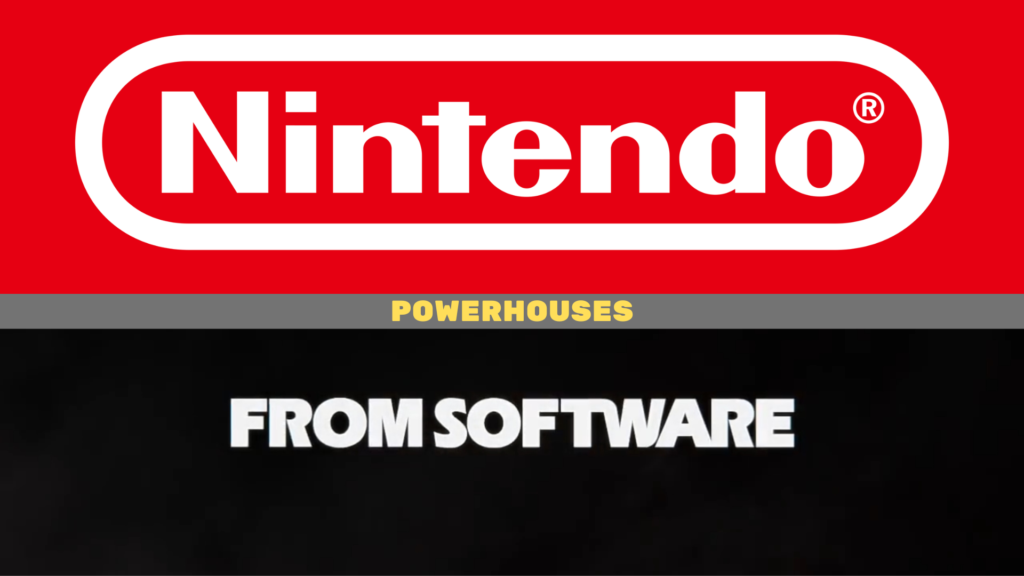
Looking at Game of the Year nomination history, one pattern stands out clearly: Nintendo and FromSoftware appear far more often than any other developers.
This dominance is not explained by a single factor, nor does it stem from the same creative philosophy. In fact, these two studios represent almost opposite approaches to game design.
Nintendo builds games around accessibility, clarity, and polish, while FromSoftware embraces difficulty, opacity, and creative risk. Yet both repeatedly produce titles that resonate strongly enough to enter GOTY conversations.
This post looks at what Nintendo and FromSoftware consistently do better than most studios: delivering releases that feel complete, distinctive, and culturally unavoidable within a single year.
Nintendo
Nintendo’s recurring presence in GOTY nominations is often associated with nostalgia, but that explanation alone is incomplete.
While long-running franchises certainly play a role, Nintendo’s consistency comes from something more structural: the studio repeatedly delivers games that feel complete, immediately understandable, and with outstanding polishment.
Nintendo titles are built around:
- mechanics that are easy to grasp but difficult to exhaust
- systems that communicate their rules clearly
- design choices that prioritize playability over spectacle
This approach creates games that work across age groups, skill levels, and cultural contexts. A player does not need prior knowledge of gaming conventions to understand what a Nintendo game is asking of them.
Another key factor is, as mentioned befor, polish. Nintendo releases are rarely defined by post-launch fixes or unfinished systems, with exception of pokemon haha. Even when they do not radically reinvent their genres, they arrive as fully realized products, which aligns closely with how GOTY awards tend to evaluate games within a single year.
Rather than chasing trends, Nintendo relies on a stable design language refined over decades. This consistency builds trust with both players and with award panels and also helps explain why Nintendo titles repeatedly surface in GOTY nomination cycles.
FromSoftware

If Nintendo’s strength lies in clarity and accessibility, FromSoftware’s dominance comes from almost the opposite direction.
Rather than refining familiar formulas, FromSoftware established a distinct design identity so recognizable that it gave rise to an entirely new genre: the Soulslike. This identity was built through a consistent design language deliberate difficulty, systemic combat, and environmental storytelling that other studios began to imitate, until “Soulslike” became the only shorthand critics and players had for it.
FromSoftware games are defined by:
- deliberate difficulty and friction
- minimal exposition and fragmented storytelling
- strong environmental identity and authored challenge
Crucially, their impact extends beyond the players who finish them. FromSoftware titles are widely watched, discussed, and shared, turning boss fights, failures, and discoveries into cultural moments. Even players who never touch the games often recognize their mechanics, tone, and reputation.
This visibility matters for awards. Game of the Year discussions tend to favor games that shape the conversation of their release year, not just those that sell well. FromSoftware releases consistently generate discourse, vocabulary, and reference points that spill beyond their core audience.
With Elden Ring, this trajectory reached a tipping point. The game preserved the studio’s core identity while expanding its structure, making the experience more legible without diluting its design philosophy. That balance solidified FromSoftware’s position as a studio capable of both creative risk and broad recognition, ensuring that each new release enters GOTY conversations by default.
Conclusion – Nintendo and FromSoftware Powerhouses
Despite their opposing philosophies, both studios share one crucial trait: they consistently produce games that feel distinct, complete, and memorable within a single year.
That ability to create releases that momentarily rise above their genre and become cultural events is what allows these two studios to reappear in GOTY nominations while most others do not. Their games rarely feel like just another entry in a crowded release calendar. Instead, they arrive with a clear identity and a sense of purpose that immediately sets them apart.
Whether through Nintendo’s refined clarity or FromSoftware’s deliberate challenge, both studios create experiences that define conversations during their release year. And in award cycles built around reflection and comparison, games that shape the discussion are often the ones that remain impossible to ignore.
If you wish to know further than just Nintendo and FromSoftware checkout the full list: Which Studios Dominate GOTY Nominations?