Skip to content

Why Are Avatar Games So Disappointing? Avatar has always been one of those series that people genuinely love, myself included. From the very beginning, one thing stood out clearly. The emphasis on movement.
Bending was never just about throwing elements around. It was about discipline, rhythm, philosophy, and control. The creators drew direct inspiration from real martial arts to shape each bending style.
The creators clearly drew inspiration from real martial arts to shape those movements. Each element has its own rhythm, posture, and combat identity. That idea is so fundamental to Avatar that both series literally open by showing those bending forms in motion.
They are:
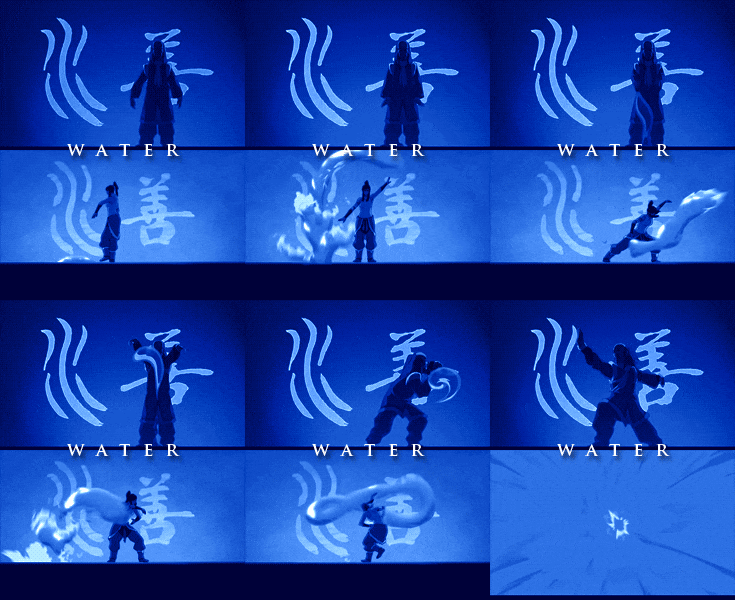
Waterbending
Waterbending is defined by adaptability and redirection. Rather than meeting force head on, waterbenders turn defense into counterattack, using an opponent’s momentum against them.
The style revolves around fluid transitions, shifting seamlessly from blocking to striking in a single motion. In combat, waterbending rewards timing, awareness, and the ability to control the flow of the fight rather than overpower it.
Earthbending
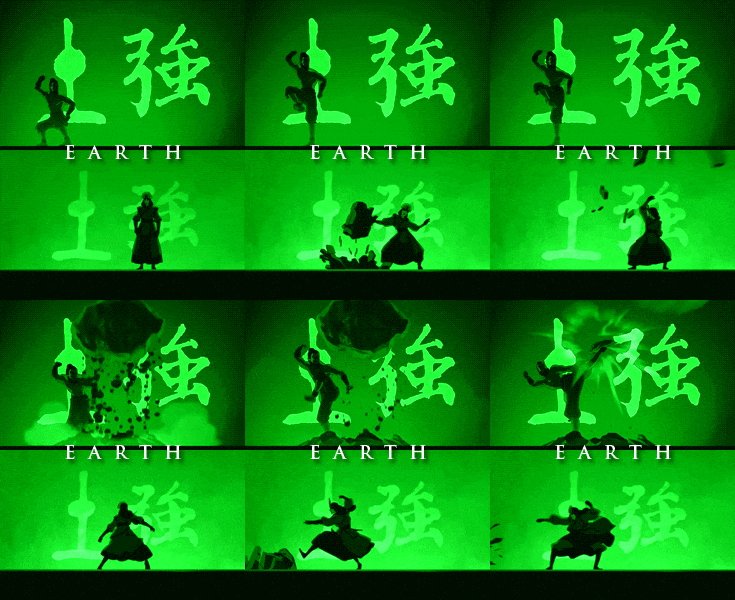
Earthbending is defined by stability and controlled power. Earthbenders stand their ground, absorbing pressure and waiting for the right moment to strike.
Rather than relying on speed or redirection, earthbending favors structure, positioning, and decisive impact, balancing offense and defense through patience and strength.
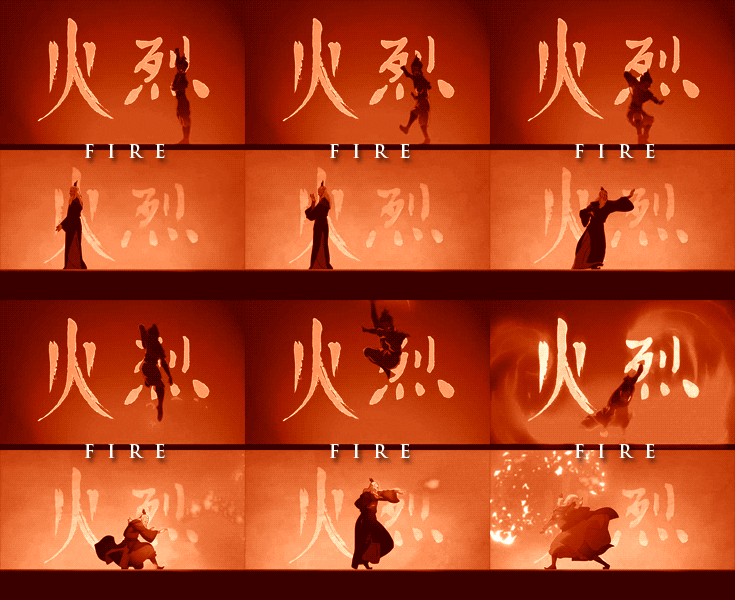
Firebending
Firebending centers on relentless pressure and direct offense. It favors swift, successive attacks designed to overwhelm opponents before they can recover. Unlike other bending styles, firebenders generate their own element, allowing them to maintain constant aggression without relying on the environment.
In combat, the style rewards momentum, intensity, and decisive execution, pushing forward rather than waiting or redirecting.
Airbending
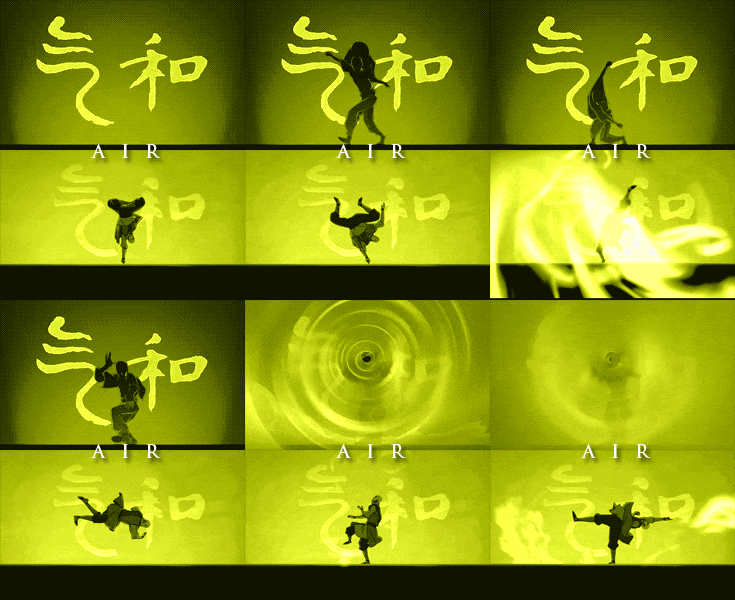
Airbending relies on speed, mobility, and constant evasion. Airbenders avoid direct confrontation, using agility and momentum to exhaust and outmaneuver their enemies. The style emphasizes continuous movement, creating space, redirecting pressure, and striking only when an opening appears.
In combat, airbending rewards fluid positioning and control of distance over raw force.
As we can see, that identity is so fundamental that both series open by showcasing those bending forms in motion. Movement is the world’s signature.
And yet, somehow, that is exactly what gets lost whenever Avatar becomes a video game.
Most Avatar games feel generic
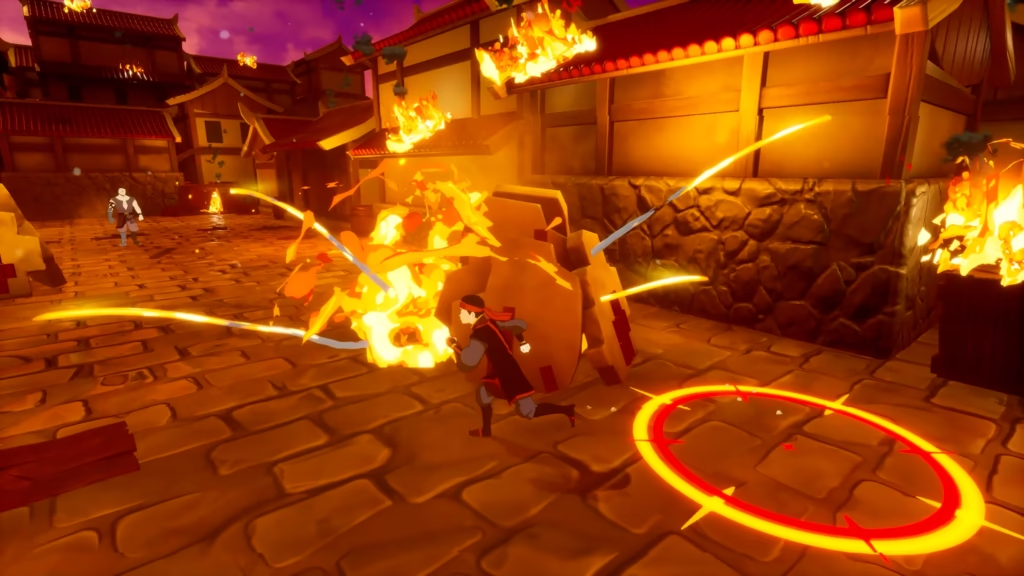
Avatar games often turn bending into flashy button mashing, reducing something deeply expressive into simple combat loops. You press buttons, effects explode on screen, enemies get knocked back, and the system moves on. It feels convenient, simplified and It misses the core philosophy entirely.
Bending should not feel or be tied only to randomness. It should feel intentional. Whether that intention is control, discipline, or pure destruction, the movement must reflect it.
Some characters in the series embrace chaos. General Zhao, for example, uses firebending as raw devastation, overwhelming everything in his path. That aggression works because it still feels grounded in a clear style and purpose. But as I mentioned before, not all elements have the same techniques and purposes.
The problem is not the chaos itself, is the emptiness presented.
When combat becomes just animation triggering, the connection between your input and the elemental power disappears. You stop feeling like a bender and start feeling like a player executing preset effects.
And honestly once you notice that disconnect, it becomes difficult to ignore.
The Martial Arts Game
That’s exactly why Sifu made me stop and think.
This is a game where you actually feel like you’re controlling a body. You feel the weight of every punch, dodge, parry, and stance. Timing aswell as positioning matters and paring that with pressure coming from enemies, it feels like a never ending dance.
The combat system forces you to respect rhythm and structure, just like martial arts do in real life. This fascinates me you are actually reacting to bodies in motion, not to interface prompts or cooldown timers.
While playing Sifu, I kept thinking that this is what bending should feel like.
It’s not crazy to imagine this cross-over, in my opinion.
The design of the mechanics is so well done that i couldn’t stop thinking about the legendary characters we meet in Avatar.
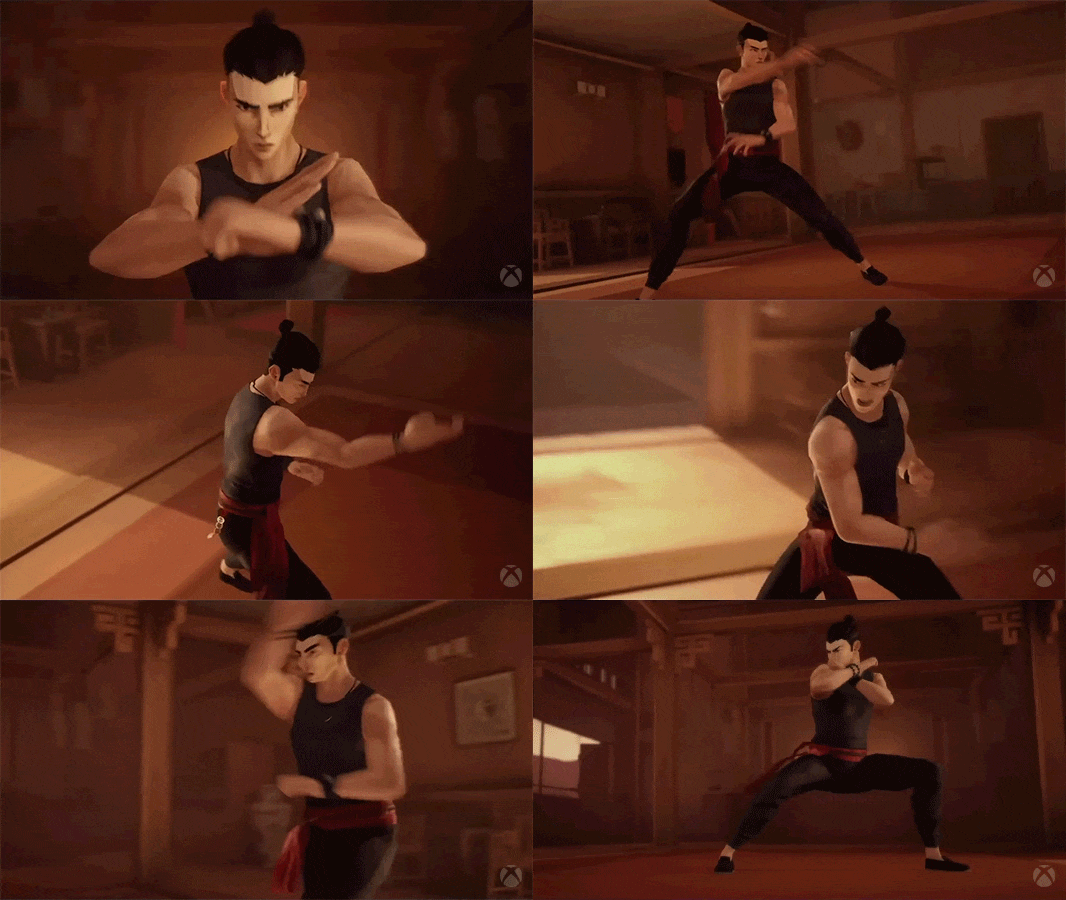
Honestly, even the art direction fits surprisingly well. Stylized, readable, focused on silhouettes and flow. You’re meant to read movement, not react to UI prompts or cooldown timers.
That’s the frustrating part.
If Avatar tried treating combat as choreography instead of mashing buttons chaos i believe we would have better games.
Avatar just needs a game that makes you feel like you were actually bending.
Final Thoughts
I do not think every show needs a video game adaptation. But Avatar absolutely deserves one that understands its core identity.
Maybe a Sifu like interpretation will never happen and it will remain in my dreams. 😀
But imagine an Avatar game where bending feels as grounded as martial arts in Sifu does.
If you enjoyed the cross-over trip you might enjoy this post where I speak about Hogwarts Legacy X inFamous.